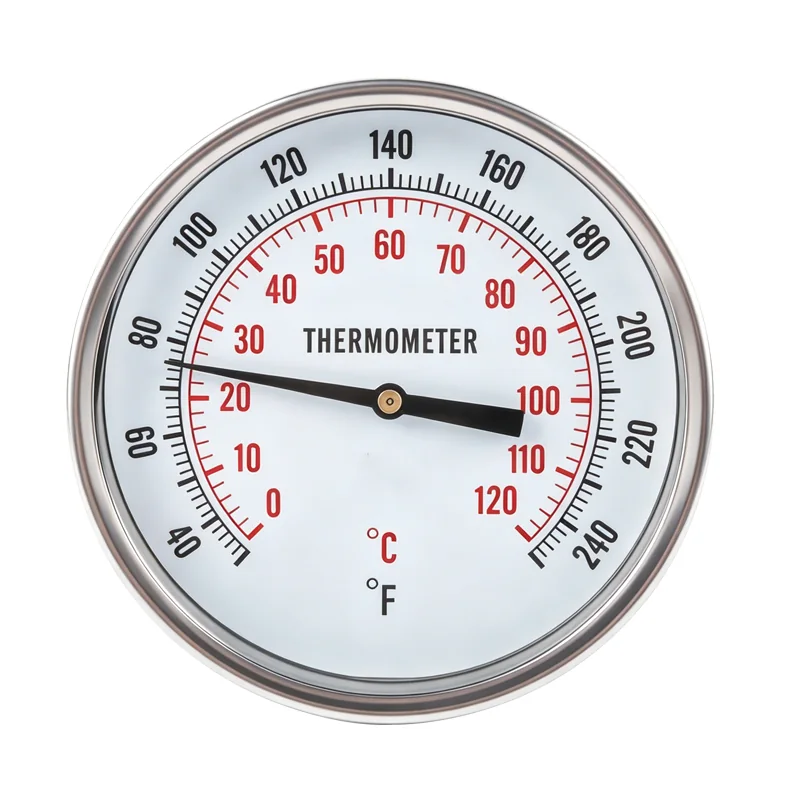
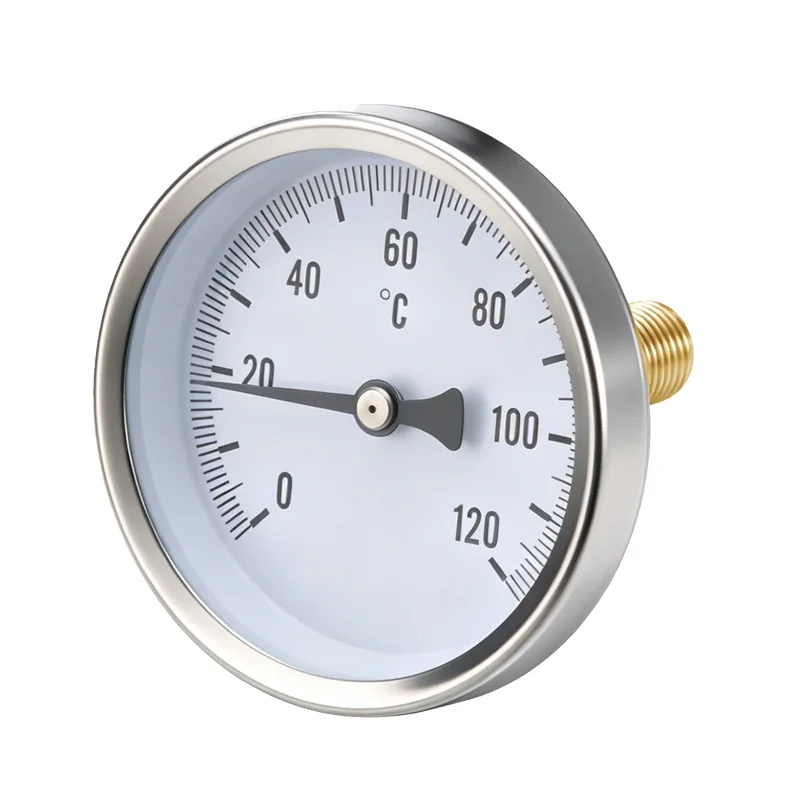
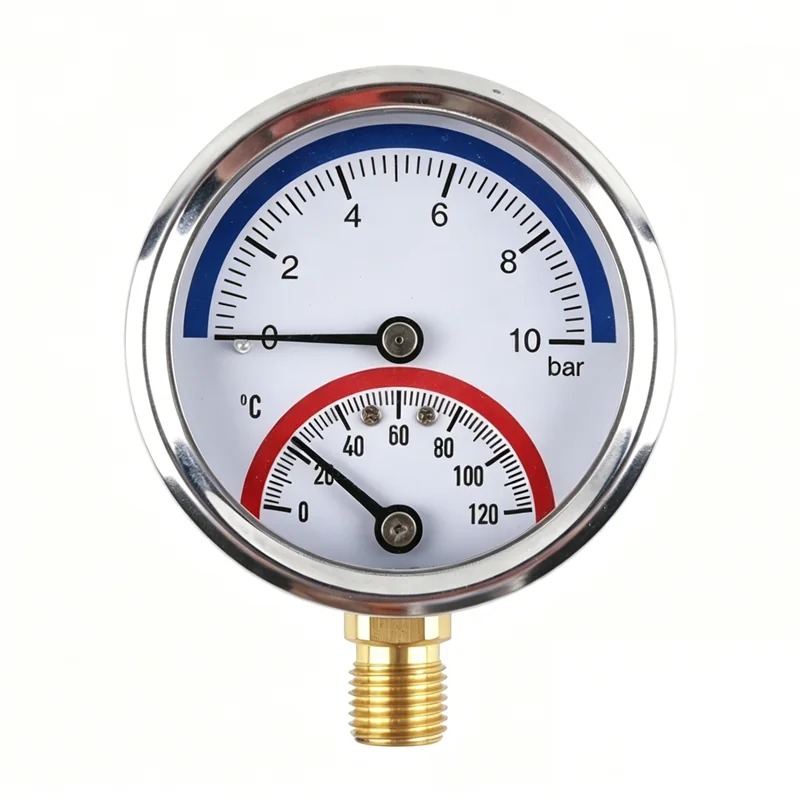
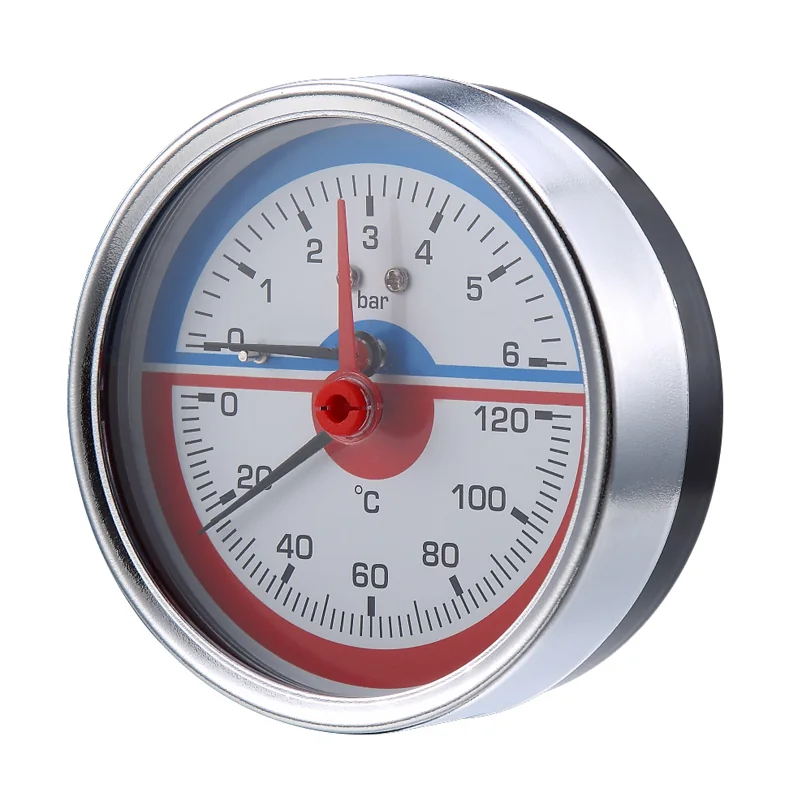
Bimetallic thermometer product scope
Bimetal and bimetallic thermometers are selected by dial size, measuring range, stem length, axial or radial mounting, stem material, accuracy class and window option. Custom details should be confirmed by RFQ.
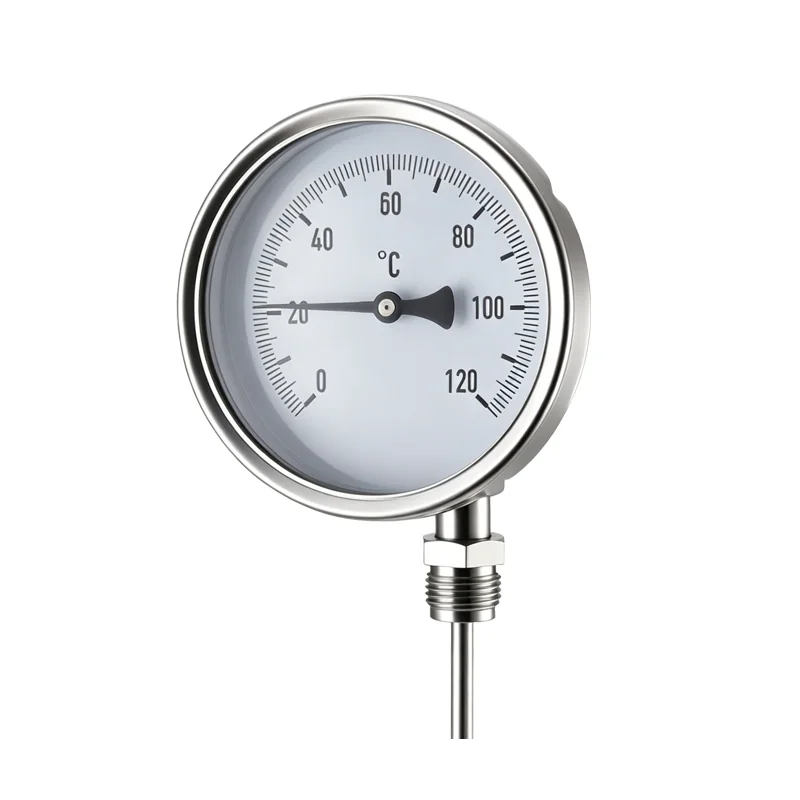
Manogauge manufactures bimetal and bimetallic thermometers for industrial temperature measurement in pipes, tanks and process equipment, offering axial and radial mounting configurations with copper alloy or stainless steel stems.

These pages cover custom OEM, China factory, explosion-proof and sanitary pressure gauge buying-intent queries, giving Googlebot a stronger internal path to rediscover and recrawl them.
Bimetal and bimetallic thermometers are selected by dial size, measuring range, stem length, axial or radial mounting, stem material, accuracy class and window option. Custom details should be confirmed by RFQ.
Two bonded metals with different thermal expansion coefficients form a helical element. As temperature changes, the differential expansion rotates the element, moving the pointer directly — no electronics, no batteries, simple and reliable for continuous process monitoring.
Boilers and steam lines, HVAC and chilled water loops, water treatment tanks, food and beverage pasteurisation, chemical reactor jackets, oil and gas separators and OEM machinery requiring reliable local temperature indication.
A bimetal thermometer responds slowly compared with a thermocouple or an RTD, because the whole stem — and the thermowell around it, if fitted — has to reach process temperature before the coil moves. Typical response is measured in tens of seconds to a few minutes depending on stem diameter, immersion depth, medium and whether a thermowell with an air gap sits in the path. That makes bimetal thermometers well suited to steady local reading and poorly suited to fast control or to catching short excursions. Accuracy is expressed as a class against the scale span, commonly to EN 13190 in European and export projects or to ASME B40.200 in North American specifications, with class 1 the tighter grade and class 2 the general industrial grade. As with pressure gauges, the class is a percentage of span, so a wide range costs absolute accuracy. Specify the working temperature you actually read rather than the extreme the process could reach, and keep the normal reading in the middle portion of the dial.
Configuration follows the reading position, not the pipe. A back-connection (axial) thermometer suits a vertical pipe read from the front; a bottom-connection (radial) instrument suits a horizontal pipe read from the side. An adjustable or every-angle head lets the dial be rotated and tilted after installation, which is the safe choice when the reading position is not fixed at design stage or when one model has to serve several orientations on a skid. There is a limit to what an adjustable head solves: if the measuring point and the operator are simply too far apart, or the location is hot, vibrating or unsafe to approach, a bimetal thermometer is the wrong instrument. A gas-actuated capillary thermometer keeps the dial where the operator is and puts only the bulb in the process, and a temperature transmitter with local indication is the choice where the value also has to reach a control system. Confirm reading position, distance, mounting orientation and thermowell requirement together, because changing any one of them after the order usually changes the stem length as well.
Final configuration still depends on medium, temperature, pressure, connection and documentation requirements.
| Item | Common options | Selection note |
|---|---|---|
| Temperature range | Common ranges from sub-zero service to 200 °C+ by model | Normal operating temperature should sit in the middle third of the dial scale. |
| Dial size | 40 / 60 / 80 mm and custom sizes by RFQ | Use larger dials for boiler rooms, elevated tanks and remote viewing. |
| Stem length | Standard and custom insertion lengths | The sensing tip must sit in the flow stream or liquid zone, not near a pipe wall or dead leg. |
| Mounting | Axial, radial or adjustable-angle designs | Confirm readability from the service walkway before choosing fixed-angle installation. |
| Thermowell | Required for pressurised or corrosive process lines | A thermowell allows removal for maintenance without opening the process line. |
For a boiler hot-water loop, the thermometer should be readable from the service aisle and inserted deep enough to measure flowing water, not pipe-wall temperature. The RFQ should include pipe size, normal water temperature, maximum temperature, connection and whether the line can be shut down for maintenance.
Use the RFQ form when you have range, connection, quantity or drawings. Use WhatsApp when you only need a quick compatibility check before preparing the full purchase file.
Temperature range, stem length, dial size and connection are the first specifications to confirm because they control readability and installation fit.
A thermowell may be required for pressure vessels, high-flow pipelines, corrosive media or maintenance-friendly installation. Confirm with the project engineer.
Yes. Send insertion length, connection thread, temperature range, dial diameter, quantity and any drawing or datasheet requirement.
Yes. Buyers use both terms for the same local temperature instrument. The key selection variables are temperature range, stem length, dial size, connection thread, mounting angle and thermowell requirement.
MOQ for standard bimetal thermometer models is typically 10–50 units. Custom stem lengths or non-standard dials may require higher minimums. Send your requirement for a confirmed MOQ and lead-time.
Yes. Sample units are available for evaluation. Submit your specification via the RFQ form and indicate your sample requirement.
Accuracy is stated as a class against the scale span, typically to EN 13190 or ASME B40.200, with class 1 tighter than class 2. Because the class is a percentage of span, a wide scale gives a larger absolute tolerance. Specify the narrowest scale that still covers your working range, and keep the normal reading near the middle of the dial.
Use a gas-actuated capillary thermometer when the measuring point and the reading position cannot be the same — a hot, vibrating or hard-to-reach tapping, or a dial that must be visible from a walkway or panel. The bulb stays in the process and the dial is mounted where the operator is. If the reading also has to reach a control system, a temperature transmitter with local indication is the better fit.
Route buyer traffic into downloadable PDF guides for selection, thread standards, materials, installation, troubleshooting and OEM customization.