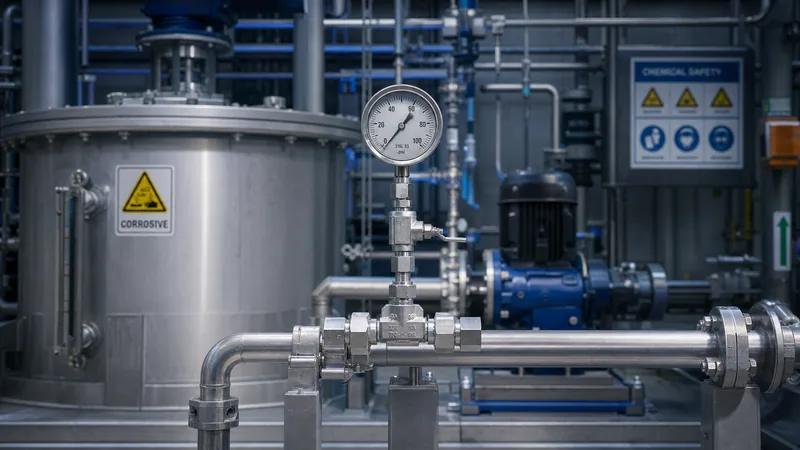
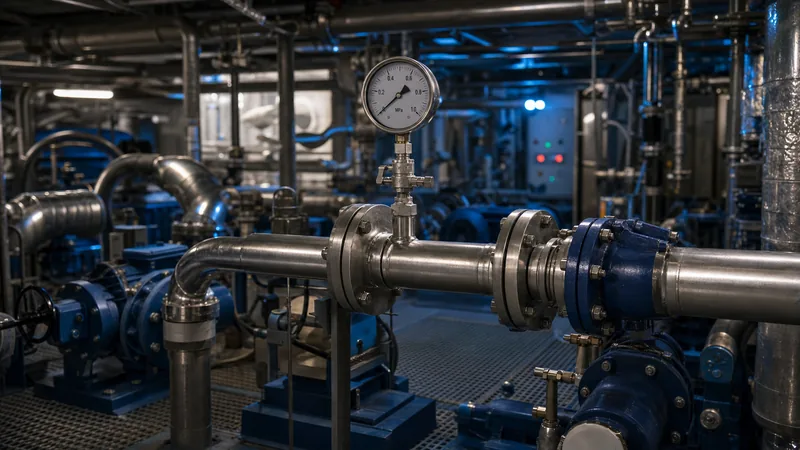
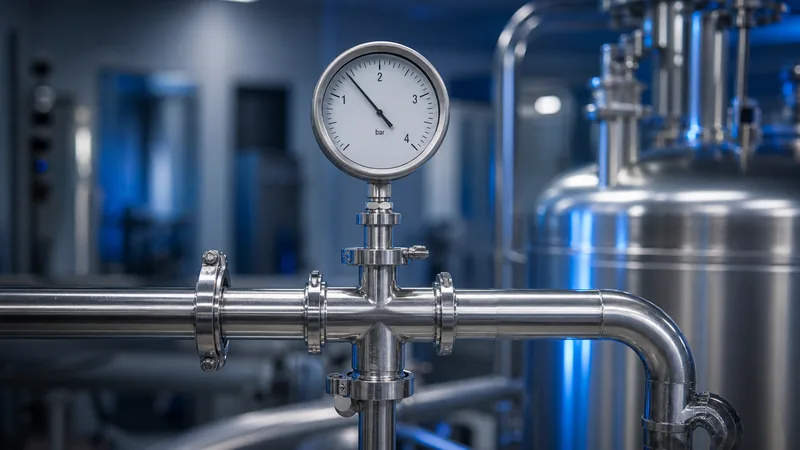
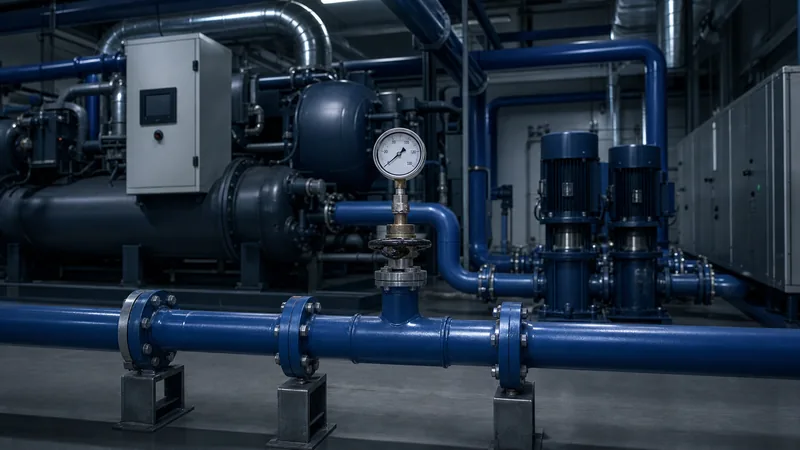
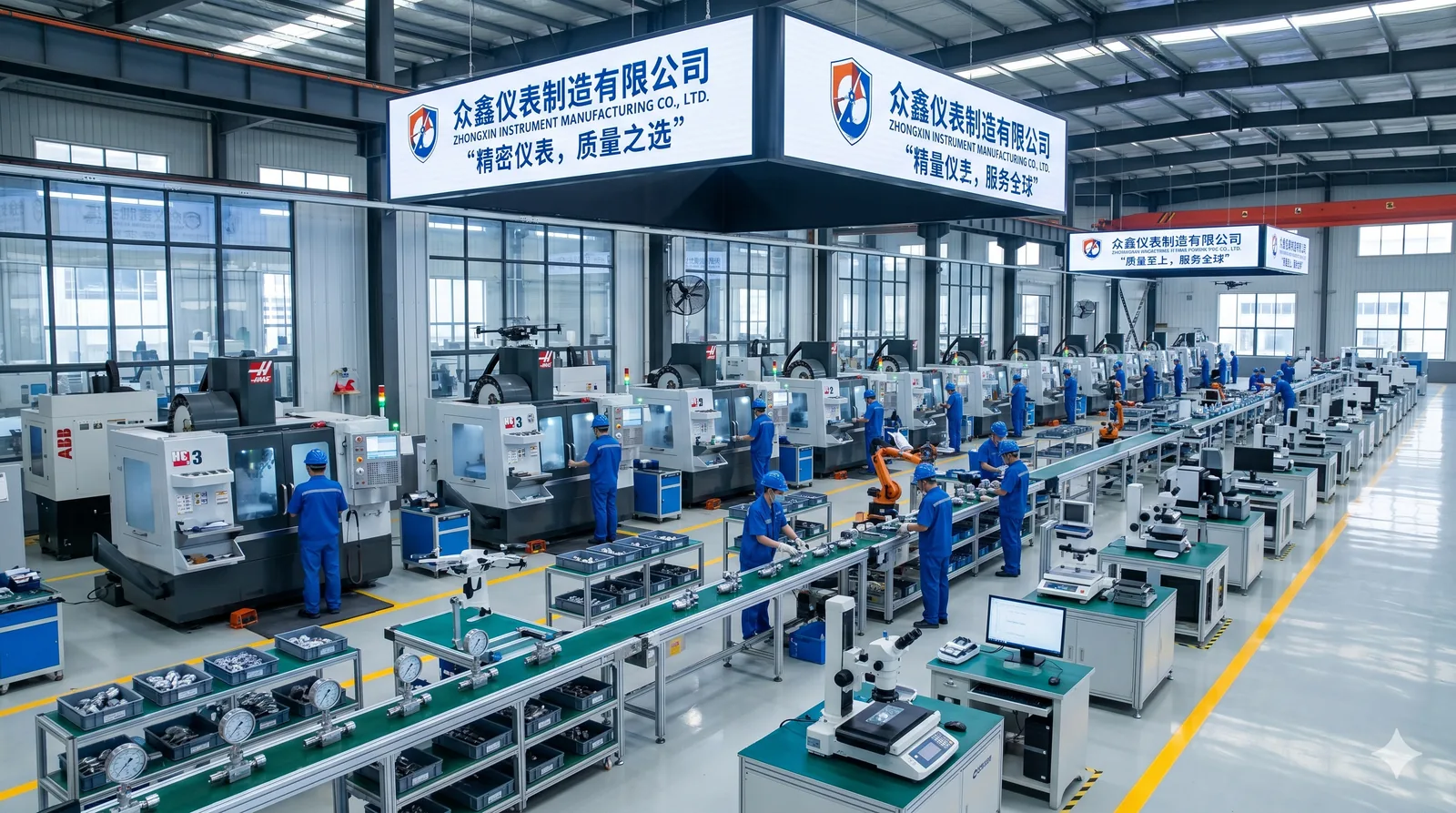
304 and 316L stainless steel pressure gauges for chemical, food, marine and pharmaceutical applications. Dry and liquid-filled configurations, custom wetted material confirmed by spec.
Certified · China Ministry of Science
Proprietary gauge technology
Confirmed by applicable model
Custom dial printing supported
316L stainless steel resists chlorides, dilute acids and many chemical media that rapidly corrode brass Bourdon tubes and fittings.
316L wetted material can be specified for food, beverage and pharmaceutical utility lines when the buyer confirms the required process documentation.
All-stainless construction handles salt spray, wash-down environments and coastal outdoor installations where brass fails prematurely.

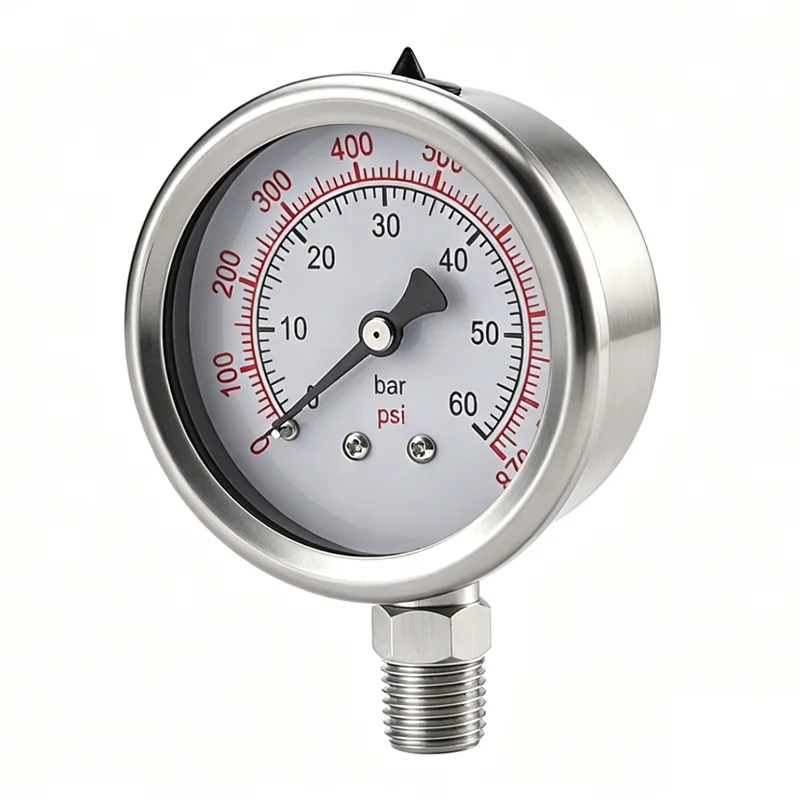
Bottom-entry all-stainless gauge. SS Bourdon tube, SS socket, SS case. Dry configuration standard.

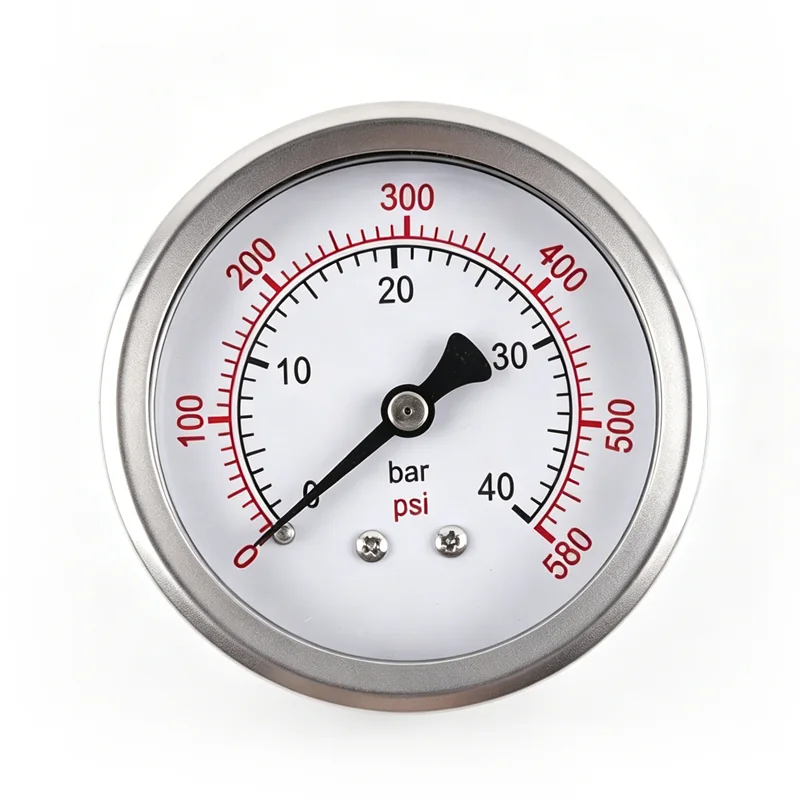
Back-entry stainless steel gauge. Panel mount and direct connection. Food and chemical service.

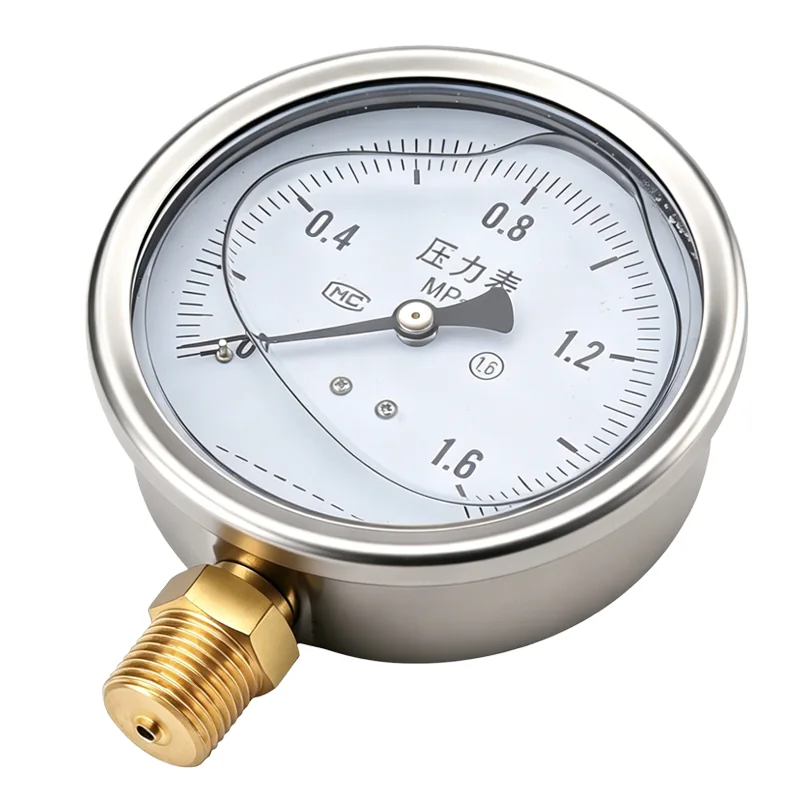
Stainless case + 316L wetted parts + glycerin fill. Chemical service with vibration requirement.

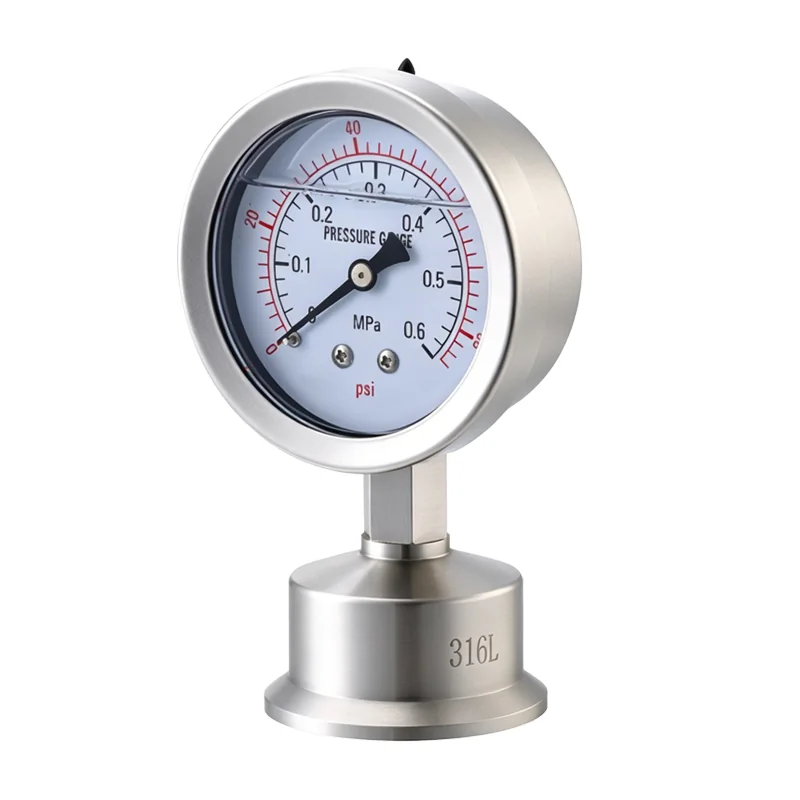
316L diaphragm isolating the gauge from viscous, slurry or highly corrosive media.

Dosing skids, reactor vessels and chemical transfer lines where brass Bourdon tubes corrode from acid or chloride media.

CIP system pressure, steam supply lines, pasteuriser pressure and refrigeration utility circuits in food production.

Deck fittings, seawater cooling systems and offshore platform process lines exposed to salt spray and humidity.

Clean utility steam pressure, WFI system monitoring and injectable manufacturing process skids.

RO membrane inlet/outlet pressure, chemical injection skids and seawater desalination applications.

Condenser water, chilled water and glycol circuits specified with SS instrumentation for longevity.
304 vs 316L selection reviewed against working medium and temperature. We flag compatibility concerns before production starts.
Full stainless builds available: SS Bourdon tube, SS socket, SS case and SS window ring for maximum corrosion resistance.
Custom scale, logo and colour dial printing for distributors and OEM equipment builders. Minimum quantities apply.
Own manufacturing plant in Zhejiang. No trading company markup. Competitive pricing from MOQ 10 pcs.
Include these details for an accurate quote within 24 hours.
Submit RFQ Now →A pressure gauge described as stainless steel can mean two very different things. In a tube-and-socket assembly the Bourdon tube and the socket are the wetted parts — these are what the medium touches, and these are the parts that must be 304 or 316L for corrosion service. The case, bezel, pointer and movement are separate: a gauge can have a 304 case fitted to a brass socket and a brass Bourdon tube, which gives a corrosion-resistant exterior and no corrosion resistance at all where it matters. When a datasheet says stainless steel gauge, ask which of the wetted parts, case and movement are stainless, and confirm whether the tube and socket are welded (all-welded 316L construction) or soldered. Soldered joints introduce a third material into the wetted path and are not appropriate for many chemical or higher-temperature duties.
Stainless steel pressure gauges are ordinarily supplied to EN 837-1 (Bourdon tube pressure gauges: dimensions, metrology, requirements and testing) or to ASME B40.100 in North American projects. Both define accuracy in classes expressed as a percentage of full-scale span, so the class alone does not tell you the absolute tolerance — a class 1.6 gauge on a 0-25 bar scale and the same class on a 0-250 bar scale differ by a factor of ten in bar. Common dial diameters are 63 mm, 100 mm and 160 mm in metric markets and 2.5 inch and 4 inch in imperial markets; a larger dial is chosen for distance reading and finer scale graduation rather than for accuracy on its own. State the accuracy class, dial diameter, scale unit and any dual-scale requirement in the RFQ, and note whether a calibration certificate or material certificate is needed, because these are prepared during production and are difficult to add after shipment.
When the medium or environment may corrode brass — chemical service, marine environments, food-grade lines, outdoor coastal installations or wash-down areas.
304 suits many applications. 316L is specified when chloride content is significant, for pharmaceutical utilities or per project material specs. We verify before quoting.
Yes. SS case + SS Bourdon tube with glycerin fill is a common combination for chemical service with vibration. Specify when requesting your quote.
MOQ is typically 10–50 pcs for standard SS gauge models. OEM private-label dial printing may require higher minimum quantities.
Yes. Tri-clamp and DIN 11851 connections are available for food and pharmaceutical applications. See our Sanitary Gauge page for details.
Yes. Samples are available for most standard SS gauge models. Submit your specification via the RFQ form noting you need a sample for evaluation.
No. Case material and wetted material are specified separately. A gauge can have a stainless case with a brass socket and a brass Bourdon tube. For corrosion service, confirm the wetted parts specifically — socket and Bourdon tube in 304 or 316L — rather than relying on the case description.
EN 837-1 is the usual reference for Bourdon tube pressure gauges in European and export projects; ASME B40.100 is common in North America. Both express accuracy as a class based on full-scale span. Confirm which standard your project specifies before ordering, because dimensions, safety patterns and test requirements differ between them.
Review wetted parts, case, window, movement and connection material checks before specifying stainless steel gauges for corrosive, washdown, marine or pharmaceutical environments.
304 & 316L options. Factory pricing. OEM support included.