
Clean steam pressure gauge selection for pharmaceutical SIP service must consider more than range and dial size. This guide explains where pressure readings help, where they do not prove sterility, and how to specify wetted materials, sanitary connections, calibration evidence and monitoring points for clean steam loops.
1. Clean steam pressure gauge selection starts with the SIP function
Clean steam pressure gauge selection for pharmaceutical SIP service is not the same as buying a general utility steam gauge. Steam-in-Place, or SIP, sterilizes connected vessels, piping, valves and filters without dismantling the equipment. The pressure instrument is part of the evidence that saturated steam is present, distributed and repeatable, but it does not prove sterility by itself.
In pharmaceutical and biotechnology plants, clean steam is commonly generated from purified water or water for injection quality feed, then distributed to process skids, sterile filters, transfer lines, bioreactors and filling equipment. The gauge or transmitter may sit on a clean steam header, after a pressure regulator, near a vessel inlet, on a condensate leg, or beside a sterilizing filter housing. Each point answers a different question: supply availability, regulator behavior, local delivery, blockage, or cycle repeatability.
Regulatory guidance is clear that the reliability of cycle monitoring devices matters. FDA guidance for sterile drug products says temperature and pressure monitoring devices for heat sterilization should be calibrated at suitable intervals, while WHO sterile pharmaceutical GMP guidance states that both temperature and pressure should monitor moist heat sterilization. Those references make pressure visible in audit records, even though temperature, time and validated cycle design remain central.
For product-side sanitary measurement, compare the connection and diaphragm options in the ZX-05 diaphragm pressure gauge and ZX-04 isolating diaphragm gauge pages before finalizing the RFQ.
Review Diaphragm Gauge OptionsExplore 143+ industrial gauge models→2. What pressure can and cannot prove in pharmaceutical SIP
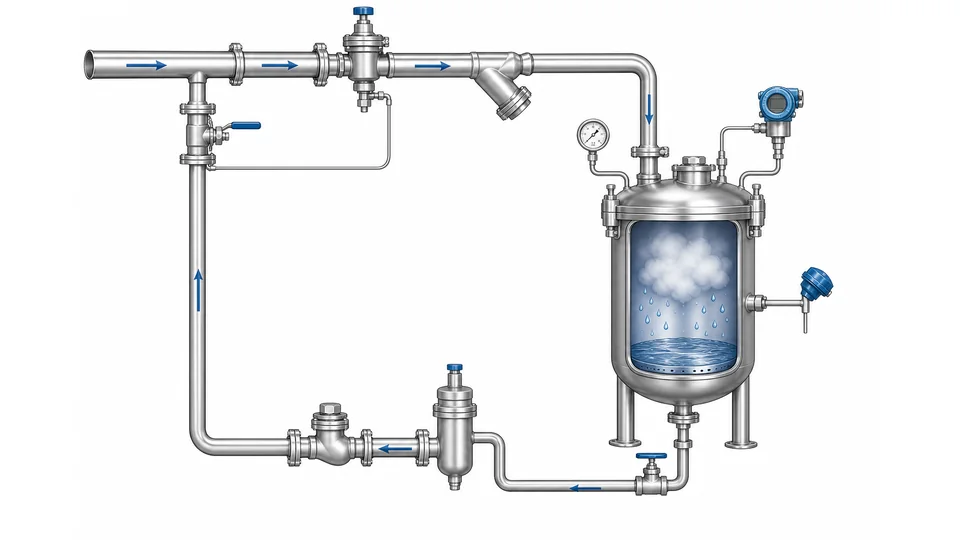
Pressure is a hydraulic and thermodynamic signal. In saturated steam service, pressure and temperature are linked, so a pressure reading helps operators notice whether the steam condition is plausible. Low pressure can indicate supply starvation, a failed regulator, an open drain, excessive condensate load, blocked strainers, or an unplanned route through a valve matrix. High pressure can indicate a closed outlet, undersized venting, a blocked trap, or incorrect cycle sequencing.
However, a normal pressure trend cannot prove that every cold spot reached the required sterilizing condition. It cannot confirm microbial kill, air removal, bioburden, endotoxin control, or product release. A useful SIP record combines pressure with calibrated temperature sensors, dwell time, condensate behavior, valve state, biological or chemical indicator strategy where applicable, and the site validation protocol.
This boundary matters in marketing and purchasing language. A pressure gauge can support SIP verification, troubleshooting and local operator confirmation. It should not be described as a standalone sterility assurance device. For audit-facing cycles, specify calibration access, serial-number traceability and tolerance requirements in the purchase document, then align them with the site quality system.
Related reading: the pressure gauge calibration traceability guide explains what should be present in calibration records before readings are used for regulated decisions.
3. Instrument design variables for clean steam pressure gauge selection
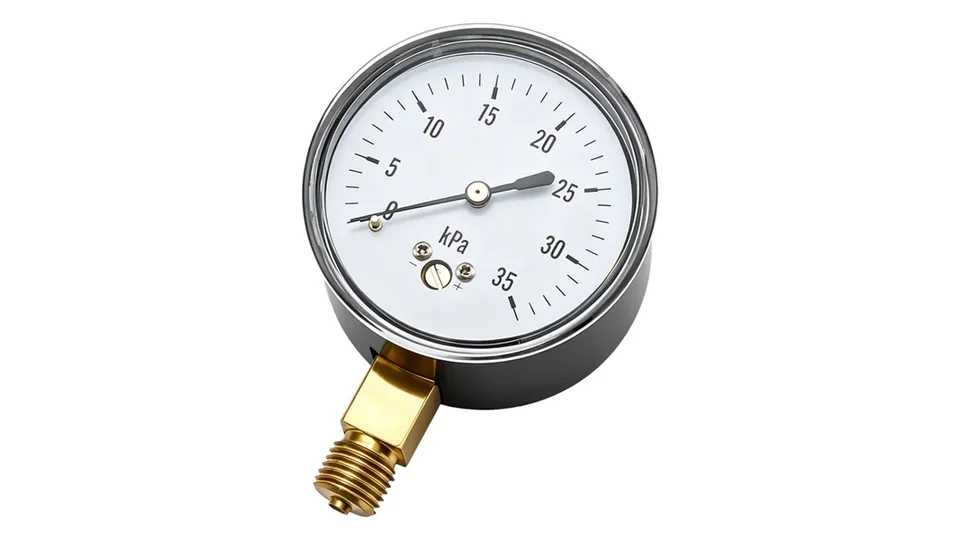
The first design variable is wetted material. 316L stainless steel is commonly requested for pharmaceutical clean utilities because it supports corrosion resistance and hygienic fabrication practice. The material still must be checked against condensate chemistry, cleaning agents, passivation, gasket selection and the plant specification. Do not assume that a catalog phrase such as stainless steel automatically confirms GMP suitability.
The second variable is connection design. Threaded sockets can be acceptable on some clean utility headers, but product-contact or sanitary branches often require hygienic clamp, aseptic coupling, or flush diaphragm designs to reduce hold-up volume and cleanability risk. Dead legs, air pockets and trapped condensate are process-design problems; the instrument connection should not create another one.
The third variable is temperature exposure. SIP may expose the instrument diaphragm, gasket and fill fluid to repeated saturated steam cycles. A local mechanical gauge, a diaphragm seal assembly, and an electronic pressure transmitter have different limits for temperature, accuracy shift, washdown exposure and maintenance. Confirm the maximum continuous temperature, peak SIP temperature, ambient washdown rating, case venting, gasket material and whether the instrument must survive CIP chemicals before every SIP cycle.
| Variable | What to confirm | Why it matters |
|---|---|---|
| Wetted material | 316L, diaphragm alloy, gasket | Corrosion resistance and hygienic compatibility |
| Connection | Clamp, aseptic coupling, thread, flange | Drainability, dead-leg control and installation fit |
| Range | Normal SIP pressure, regulator setpoint, design pressure | Readable middle-scale operation without overload |
| Calibration | Points, tolerance, certificate, interval | Audit-ready records for regulated cycles |
| Temperature | SIP peak, ambient, washdown, fill fluid | Prevents drift, leakage and window damage |
4. Where gauges and transmitters fit in a clean steam loop
A clean steam loop rarely needs only one pressure point. The supply header shows whether steam is available before the skid. A regulator outlet point shows whether pressure reduction is stable. A local point at the equipment inlet shows whether the intended branch receives steam. A condensate or return-side point can expose drainage restrictions, blocked traps or abnormal backpressure.
Mechanical gauges and electronic pressure transmitters have complementary roles. A mechanical clean steam pressure gauge gives technicians a local reality check during commissioning, troubleshooting and maintenance. A transmitter provides continuous signal to a PLC, historian or batch record. Critical points may use both, with the local gauge mounted through an isolation valve or sanitary diaphragm seal so maintenance does not compromise the process boundary.
Placement should respect steam safety. Steam at even moderate pressure can cause severe burns, and clean steam skids may include hot condensate legs, pressure regulators, relief devices and high-temperature surfaces. Gauge orientation, siphon or diaphragm protection, isolation valves and maintenance access should be reviewed by the system engineer. For general installation rules, see the pressure gauge installation best practices article.
5. Common specification mistakes in SIP pressure instruments
The most common mistake is selecting only by pressure range. Range matters, but SIP duty also depends on temperature cycling, condensate, cleaning chemistry, connection geometry, calibration requirements and the consequence of a wrong reading. A gauge that reads correctly at room temperature may drift or leak after repeated steam cycles if the diaphragm, gasket or fill fluid was not selected for the service.
A second mistake is treating utility steam and clean steam as interchangeable. Plant steam can be suitable for heating jackets or non-contact service, while clean steam is used where steam or condensate can contact sterile product paths or direct product-contact surfaces. The instrument documentation, surface finish expectations and cleaning approach may therefore differ.
A third mistake is copying a food CIP specification into a pharmaceutical SIP loop. CIP focuses on cleaning residues with chemistry, temperature, turbulence and time. SIP focuses on sterilizing conditions after cleaning. The same sanitary connection may appear in both, but the validation record, temperature exposure, calibration interval and risk classification can be different.
When the RFQ is unclear, ask the buyer for the site pressure class, normal operating pressure, SIP peak temperature, connection standard, gasket material, calibration points, required documents and whether the reading is for local indication, alarm, batch record or qualification support.
6. Practical RFQ checklist for pharmaceutical clean steam gauges
A useful RFQ for pharmaceutical clean steam pressure instruments should be short but specific. Include the medium as clean steam or pure steam, not simply steam. State the normal and maximum pressure, expected SIP temperature, connection type and size, wetted material, diaphragm or seal requirement, case material, dial size, accuracy class, output signal if using a transmitter, and the destination market.
For regulated use, add the documentation package: material certificate if required, calibration certificate format, serial number traceability, certificate language, inspection points, surface finish requirement if applicable, and any site-specific references. Do not ask a supplier to confirm ASME, PED, CE, 3-A, FDA or GMP compliance unless the exact scope, product and document requirement are defined; those claims need matching evidence.
Manogauge manufactures industrial pressure gauges in Zhejiang, China under ISO 9001 quality management and exports pressure instruments to multiple markets. For clean steam pressure gauge selection, the final specification should still be confirmed against the owner’s SIP validation protocol, piping class, cleaning chemistry and quality-system requirements.
External references used for this guide include FDA aseptic processing guidance and WHO GMP guidance for sterile pharmaceutical products.
Key takeaways
- Pressure supports SIP verification but does not prove sterility by itself.
- Confirm 316L wetted parts, sanitary connection geometry, gasket, temperature exposure and calibration evidence.
- Use both local gauges and transmitters when operators need field confirmation and batch records need continuous data.
- Final selection must match the plant SIP validation protocol and quality system.
Frequently asked questions
What is clean steam pressure gauge selection for SIP?
It is the process of matching a pressure gauge or transmitter to pharmaceutical clean steam sterilization service, including wetted material, connection, temperature exposure, calibration evidence and monitoring purpose.
Does pressure prove that an SIP cycle achieved sterility?
No. Pressure supports verification of saturated steam behavior and cycle plausibility, but sterility depends on validated temperature, time, air removal, biological strategy where applicable and the site quality program.
Where should pressure be measured in a clean steam SIP loop?
Common points include the clean steam header, regulator outlet, equipment inlet, filter housing, condensate leg and selected return or drain points. The right points depend on the validated cycle and piping design.
Which materials are typical for pharmaceutical clean steam gauges?
316L stainless steel wetted parts are commonly requested, but diaphragm alloy, gasket, surface finish, fill fluid and cleaning chemistry must be confirmed against the plant specification.
What should be included in an RFQ for a clean steam pressure gauge?
Include medium, pressure range, SIP temperature, connection standard, wetted material, diaphragm or seal requirement, accuracy, calibration certificate, serial traceability and whether the signal is local indication or batch record data.